Sunday, 30 November 2014

31) Kind of Cruel 32) All's Well That Ends Well

31) Kind of Cruel by Sophie Hannah

The alternating points of view in this thriller come slowly together, revealing the importance of Little Orchard and why four members of her family disappeared one Christmas, only to come back two days later without a word.  Kind, Cruel, Kind of Cruel; the phrase reverberates through the novel, but what does it mean, and why is Amber arrested for saying it? This book is well-crafted and enjoyable to read, if not exactly relaxing. One to take on holiday, rather than late-night literature.


32) All's Well That Ends Well by William Shakespeare

I'd never seen/ read this play before studying it this year, and while not one of my favourite Shakespeare plays, I enjoy the interesting gender dynamics implicated by Helen and Bertram's marriage and the bed trick. It's made me question my ideas on the ethics of deceit  and reconsider class distinctions.Undermining our expectations in many ways, it's easy to see why this is classed as a problem play; even the supposedly happy ending leaves us unsatisfied, as we question Bertram's conditional terms, and his ability to fulfill them. All's well that ends well, the title tells us, but in agreeing with this we are implicated in the characters' deceit and betrayal; can the end really justify the means? 


Saturday, 29 November 2014

29) The House of Silk 30) Telling Liddy

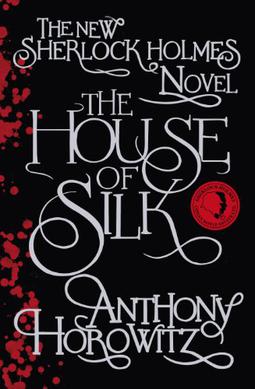
29) The House of Silk by Anthony Horowitz

Having recently read a lot of the original Sherlock Holmes collection (before starting this blog), I really enjoyed this book, as it perfectly captures Conan Doyle's narrative style, whilst dealing with a far more controversial subject than any of the other cases. The plot unfolds beautifully, keeping you guessing right until the very end what The House of Silk is, when the disturbing truth comes to light. I recommend this book for fans of Mr Holmes, whether that be of the original stories, any of the plethora of films, or the outstanding BBC series. The game's afoot, if you wish to play...


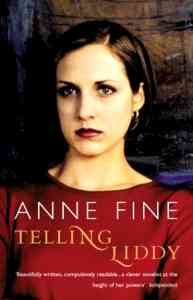
30) Telling Liddy by Anne Fine

Telling LiddyAnne Fine has a disturbing way of getting under your skin; I had to get ride of my copy of The Tulip Touch when I was younger as I found it so unsettling. This book is less obviously sinister, but leads us to a moral dilemma that makes us question ourselves and our family loyalty: what do you do when you hear a shocking rumour about your sister's new boyfriend? Do you tell her and risk ruining your relationship if it isn't true, or do you keep quiet, but feel guilty for not warning her. The dynamic between the four sisters in this book is captivating and uncomfortable; and as the truth slowly comes together, and the sisters' lives fall apart, we feel a sense of voyeurism in observing this family tragedy, and yet we cannot look away.

Thursday, 27 November 2014

27) The Kill Order 28) Troilus and Cressida


27) The Kill Order by James Dashner
This book is the prequel to the Maze Runner series, and I really enjoyed reading things from Mark's perspective, and finding out the events that led up to the flare (trying to avoid spoilers here!) There are more female characters in this book, which I appreciated, although the characterisation is slightly two-dimensional in some cases, and the writing style is still a bit clunky. I really enjoyed finding out how everything began though, and am curious about the sequel-to-the-prequel (haha) which should be coming out in 2016. I'm hoping that it focuses on Teresa and Thomas, and their time before the maze.


28) Troilus and Cressida by William Shakespeare

I'm studying this play at uni and I find the re-telling of the Trojan War really interesting, especially as the focus isn't on Paris and Helen, but on Troilus and Cressida. While ultimately unsatisfying (the ending is not at all what we're led to expect, considering the precedent given by Romeo and Juliette and Antony and Cleopatra) the play captures our interest through the intriguing characterisation of the double-faceted Cressida, and the distrustful Troilus. The fact that their roles have already been laid out for them by Chaucer, which the characters predict in saying  'As true as Troilus' and  'as false as Cressid', does not prevent us from bemoaning their bewildering fate. This play can be viewed in turns as a history, a tragedy, and  a comedy; and this problem of genre perfectly compliments its problematic ideology.

Wednesday, 26 November 2014

25) The Scorch Trials 26) Death Cure


25) The Scorch Trials and 26) Death Cure by James Dashner


Firstly, I would like to apologise for my long absence. I've been rather busy lately, and have been putting off blogging due to my massive back-log, but I decided to get down to it today.

I have to say that I thought that these two were not as well written as the first book, and given that the first book already had stylistic issues, that meant that these two were less enjoyable to read. The storyline was also less compelling outside of the maze, which I loved as a setting, but it was interesting enough for me to do a bit of a reading spree and read both of these over a couple of days.

I've chosen not to write separate posts about them as they've kind of blurred into one in my head, even though the settings are quite different. As with the Divergent and Hunger Games series, I found the last book in the trilogy a bit disappointing and harder to connect with, maybe because of the increased violence and action takes away from the emotional side, which I prefer. However, I still recommend reading them if you enjoyed the first one, especially given the fact that there is some essential information given in them which makes reading the prequel, which I will write about in my next post, extremely interesting.