Sunday, 28 September 2014

19) The Magic Toyshop 20) Oranges Are Not the Only Fruit

19) The Magic Toyshop by Angela Carter

Having been recommended Angela Carter books on a number of occasions I've been intending to read one for some time now, and having this on my reading list for The Girl in the Book  has prompted me to finally do so.

Virginal Melanie comes round full circle in this fantastically disturbing and beautifully written book; draped in a white dress, pretending to be someone else. Other characters loom in the gloaming between perturbing and enchanting, and a childish obsession with puppets turns out to conceal something much darker. 

Finn (for here again is a book where one of the main protagonists goes by that name) presents an unlikely love interest: reeking and dirty, with yellowed teeth and a disquieting knowledge of unspoken things;  and yet it is this contrast to Melanie's perfumed naivety that makes their relationship so raw and interesting, and difficult to predict.       

My first forage into Carter's works has been an encouraging one, and I look forward to reading more of her work in the future, especially The Bloody Chamber, an adaptation of Bluebeard that I've heard a lot about, although it may be something that I want to read when it's still light outside...


20) Oranges Are Not the Only Fruit by Jeanette Winterson 


" 'The Devil himself is a drunk.' (Sometimes my mother invented theology)."

I think that this quote sums up the tone of this book quite well; a humorous, but worrying, look at the extremes of religion, and what they can do to people.

An interesting forage into what it's like for a lesbian to grow up in a strict evangelical community, this book was intriguing and dispiriting by turns, and mostly enjoyable to read, although I have to say that I wasn't very keen on the postmodernist meta-fictional elements, which  jarred with me, especially those involving Sir Perceval.

Overall, I recommend reading this novel this novel with an open mind, and finding your own answer as to what oranges represent.


Friday, 5 September 2014

17) L'étranger 18) What I was

17) L'étranger (The Outsider) by Albert Camus

 
I'd been meaning to read this book for ages but somehow never quite got around to it. In the appropriate setting of my job as an English teacher to French teenagers I finally bit the bullet and did it. I have to say that I don't regret it. I can see why it's such a classic; it reminds me of "Catcher in the Rye" with its strange honesty and trains of thought. It's disconcerting seeing the world through Meursault's eyes. He is so detached, so unbothered by life's daily trials that he seems alien. The worrying thing is that I can't tell if he has some kind of learning difficulty or mental illness, or if he's just someone who refuses to meet societies' expectations. Whatever he is, he's fascinating.


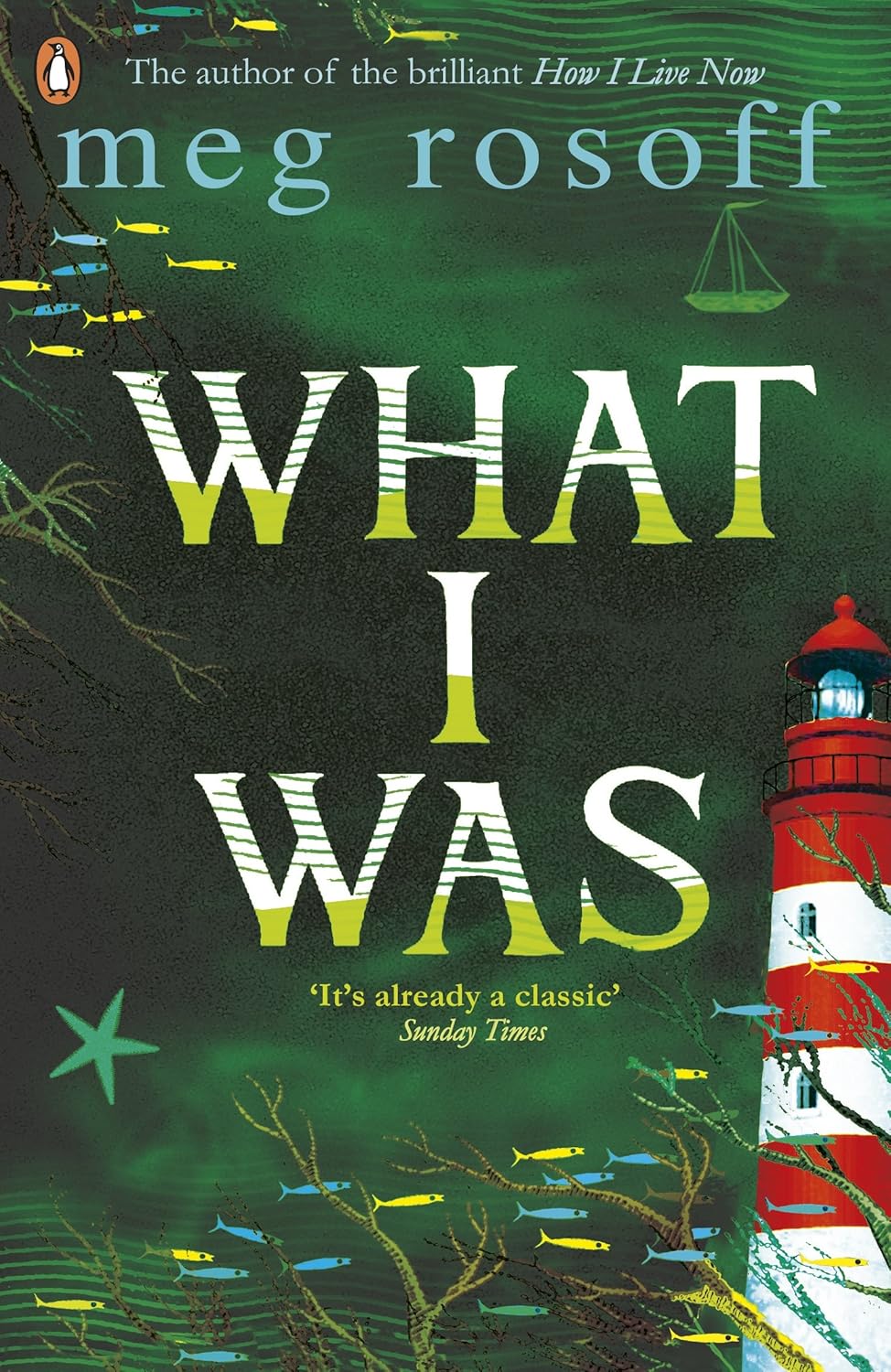
18) What I Was by Meg Rosoff

 
A young adult book that I picked up off the shelf of my family's holiday house, this book explores teenage sexuality without any sex, and teenage love without any declarations. In a way, this is frustrating; we, the readers, feel like we are being promised something that never comes to pass; but in another way it is quite refreshing, especially given the secret revealed at the very end. It is sort of ironic, that the main character, who we feel so close to, is nameless to us, yet Finn, the aloof Finn, is named but mysterious, never quite letting us in. 

I found this book enjoyable, despite a slight skepticism about the age of the main protagonist, who is supposed to be sixteen, but often seems much younger. This may, however, just be  because I don't remember well enough what it was like to be sixteen...I am getting old ^^


Wednesday, 20 August 2014

15) Bridget Jones: Mad About the Boy 16) The Night Guest

15) Bridget Jones: Mad About the Boy by Helen Fielding


This is the first book in a while that has made me laugh out loud, to the curiosity of my fellow passengers on the train. Having enjoyed the first two books in the series, it's interesting seeing both how similar and different Bridget is in middle age, to when she was in her thirties; she's still messy, late and obsessed with her weight (a bit of accidental rhyming there), but she's also maternal, nurturing and tries really hard to do the best for her kids.  

I'd recommend this book for a fun, enjoyable read that also tugs on your heart strings and doesn't let you put it down.


16) The Night Guest by Fiona McFarlane


Having only really read one thriller before (Before I Go to Sleep, by S J Watson, which I thoroughly recommend), I didn't have a lot to compare this book to, so I had to take it at face value. Bewitchingly disturbing, this is a book that invitingly sits you down and makes you a cup of tea, then before you know it, you're bound to the chair and you've burnt your tongue. After reading it I felt hollow and paranoid; like the words had crept under my skin and possessed my senses. The gradual decline is so beautifully done, so subtly implemented, that it take both us and Ruth by surprise.

Given the recent and ongoing care workers' strikes, this book seems very on-topic and I congratulate McFarlane for an amazing debut novel, which looks into important social issues in a new, and worrying, way.

Sunday, 10 August 2014

13) To Kill a Mockingbird 14) The Other Boleyn Girl

13) To Kill a Mockingbird by Harper Lee

This is one of my set texts for uni this coming year. Having already studied it at secondary school for GCSE, I'm enjoying being able to read it again from  a more adult perspective. It is, and always has been an amazing book, with an important message about equality and open-mindedness. While nominally told from Scout's perspective, rather than being about her, this is a novel about her father, and his struggle for justice. It seems to me that Atticus Finch, one of the best, if not the best father in literature, is suggested to be so because of the following attributes:

1) He  is reliable and keeps his word.

2) He stands up for what he thinks is right.

3) He loves his children unconditionally.

He is a solid, constant presence in the children's lives, and throughout the narrative, reassuring us that everything will be ok, even if the world isn't a fair place to live.


14) The Other Boleyn Girl by Philippa Gregory

I loved this book. I find non-fictional history really dull, and struggle to retain it, but  give it a narrative and not only do I find it interesting, but I remember it. This book tells the story of Mary, the "other Boleyn girl", and how she and her sister competed for for Henry VIII's favour.

Having just read "To Kill a Mockingbird", in which Scout is a valued member of her family, this book provided a bleak contrast on the position of women, which is summed up nicely by Anne's words: "One Boleyn girl or the other...We might either of us be the queen of England and yet we'll always be nothing to our family." Both Anne and Mary are just puppets in their father and uncle's plans, important only in increasing the family fortune, no matter what it may cost them, and cost them it does.


Monday, 4 August 2014

11) Continental Drift and 12) The Woman Warrior


11)  Continental Drift by Libby Purves      

I surmised from reading the blurb that this book was going to be a bit predictable, . And yes it was...to a certain extent....there were definitely some things that I didn't see coming.
Eva's beautifully sad naivety, Henry's optimism, Philip's disappointment and Diana's submission all go to make this a quite interesting read. All together it is a story of hope, of better things waiting just around the corner, or even in front of your nose.

P.S. It also includes the a quote from Tennyson, "Let the great world spin"...it's like she knew what I'd just been reading!


12) The Woman Warrior: Memoirs of a Girlhood Among Ghosts by Maxine Hong Kingston

This is a strange book, the narrative flitting in and out of Kingston's and her mother's lives, getting caught up in moments of drama, and moments of everyday family life. There is no clear narrative structure, as the book consists of several "episodes" at varying points in both women's lives, mixed in with Chinese folk-lore. However I am left feeling that there has been character development, or should I say "discovery"; rather than finding out more about the characters as each colour of the narrative is brushed onto the canvas of the story, instead it is like peeling an onion; as each layer is lifted we discover the things in the characters' past that makes them who they are.

Strange as it was, I really enjoyed peering through Kingston's character's eyes and those of her mother, and discovering the mindset of Chinese immigrants in America in the 20th century, under the shadow of the Chinese Revolution. The obsession with "ghosts" is new to me; both non-Chinese people who are classified as ghosts, and "real" ghosts, who have to be banished with smoke and fire. And yet, for a narrative so concerned with ghosts, it still feels very real; not translucent but solid and vibrant and waiting to be discovered.


Tuesday, 22 July 2014

9) Let The Great World Spin 10) Remarkable Creatures

9) Let The Great World Spin by Colum McCann


I tried reading this book a few years ago, and for some reason didn't get into it, and so stopped. Picking it up again, I was quickly drawn in to the web of intertwining lives that makes up its narrative. The man on the wire, up in the air, looks down on the world below, as do we; discovering new ways of seeing monks and prostitutes, judges and druggies; new ways of seeing life. Gloria, one of the main characters, sums up our habitual way of seeing the world nicely, when reflecting upon letters to her parents during her college days:


"I gave them all of the truth and none of the honesty."


10) Remarkable Creatures by Tracy Chevalier


Having previously read Chevalier's Girl with a Pearl Earring, Falling Angels and The Lady and the Unicorn, I had high expectations of this book, and I was not disappointed. The subject of fossils, which I was completely ambivalent about before, was brought to life through Mary and Elizabeth's eyes, and Chevalier has again taken a historical artifact and breathed a narrative into it. It made me really think about the first discoveries of dinosaur bones, and what impact this must have had on everyone's understanding of the world, and how it was created. Added to this are some interesting reflections on women's place at a time when they were seen as being "a spare part" and not fit to walk "down a London street alone". It makes me realise, that even if we still have some way to go with gender equality, I am very lucky to have as much freedom as I do today.


Thursday, 3 July 2014

7) A Long Way Down 8) What Maisie Knew

7) A Long Way Down by Nick Hornby


I don't remember how I acquired this book but I put off reading it due to a fear of it being too depressing. It is, after all, about four people who want to commit suicide. Strangely enough, it turns out that it's quite an uplifting book. Yes, it deals with difficult situations, but it deals with them with a lot of humour and self-deprecation. I particularly like Jess' nihilistic character, the tough exteriror of which hides a sensitive, lonely little girl. Albeit a sensitive, lonely little girl who likes swearing. A lot. In fact, all the characters, bar Maureen swear a lot. JJ muses on this with rather comic effect:

"How do people, like, not curse? How is it possible? There are all these gaps in speech where you just have to put a 'f***'. I'll tell you who the most admirable people in the world are : newscasters. If that was me, I'd be like, 'And the motherf*****s flew the f***ing plane right into the Twin Towers.' How could you not, if you're a human being? Maybe they're not so admirable. Maybe they're robot zombies."

N.B. In the original, the swearwords aren't asterisked -out, but as I'm not one for swearing myself, and I haven't put an age restriction on this blog, I thought it was better to do so.

This, coupled with Maureen's naïvety ("I don't know how those jet-set people who have to fly once or twice a year cope, I really don't") and Jess' casual stereotyping ("I could imagine Martin and Cindy having kids called Polly and Maisie, which are sort of old-fashioned posh names, so everyone could pretend that Mr Darcy or whatever lived next door.") go to create a very funny, enjoyable read.

I even finally learnt the meaning of "Having your cake and eating it":

"Jess looked kind of doubtful. 'Are you sure that's it? How can you eat a cake without having it in the first place?'
   'The idea,' said Martin, 'is that you get it both ways. You eat the cake, but it somehow remains untouched. So "have" here means "keep".'
'That's mental.'
'Indeed.' "

I think, however, that I can, with this book, have my cake and eat it; I have read a book with a thought-provoking, serious subject matter, but also enjoyed it and laughed a lot along the way.  So there.

8) What Maisie Knew by Henry James


I have to say, if I hadn't been reading this for uni, I'm not sure I would have finished it. I've been reading it on and off for over a week now and there were some points where I was looking at the "percentage read" bar at the bottom of my kindle and willing it to go faster. That being said, it's a very powerful book, dealing with the aftermath of a divorce on a child (perhaps another reason I struggled with it, as this came a but close to home) and how innocence can be manipulated. The plot is almost ridiculous in many ways, but purposely so, and it adds some levity to the harsh words and hypocrisy of the characters:

      "Your father wishes you were dead - that, my dear, is what your father wishes."

        "You'll never know what I've been through about you - never, never. I spare you everything, as I       always have."

AND 

       "You know your mother loathes you, loathes you simply."

       "Repudiate your dear old daddy - in  the face, mind you, of his tender supplications. He can't
         be rough with you - it isn't in his nature."


I would by no means call James' book a bad one; rather I would say that it sometimes moves quite slowly and is very wordy; not something to read when you're tired! All in all it covers an interesting, and contemporarily relevant subject in a fresh way (it was probably quite scandalous in 1897!) and I'm looking forward to hearing what my lecturer has to say about it.